

Designing Outdoor Spaces for Climate Resilience and Comfort
Outdoor spaces are increasingly expected to perform under more demanding environmental conditions. Rising temperatures, heavier rainfall events, and longer periods of sun exposure are influencing how architects and property owners approach patios, terraces, gardens, and communal open-air areas. Research from the World Meteorological Organization shows that climate-related weather extremes are becoming more frequent, creating stronger demand for outdoor environments that remain comfortable and functional across changing seasons.
Design professionals are responding by incorporating adaptive features that support thermal comfort and weather resilience at the same time. Industry discussions around climate-responsive architecture often reference systems like Pergomaxx bioclimate pergole when examining how adjustable louvers, controlled ventilation, and flexible shade structures can improve outdoor usability without fully enclosing exterior spaces. These solutions are increasingly associated with passive environmental design strategies that help outdoor areas respond more effectively to sun, wind, and rain.
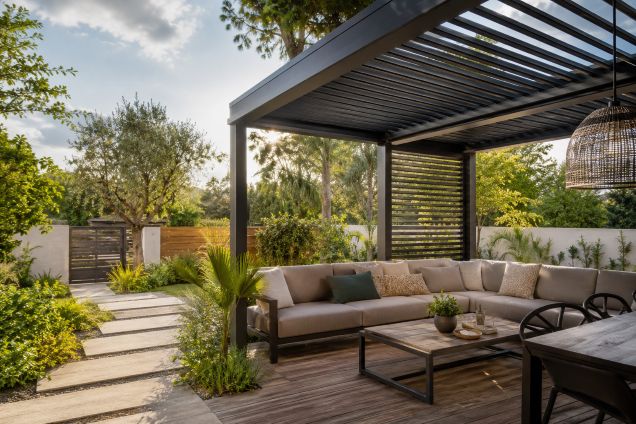
1. Prioritize Shade to Reduce Heat Exposure
Heat accumulation remains one of the biggest challenges in outdoor design. Surfaces such as concrete, asphalt, metal, and glass absorb and retain heat throughout the day, contributing to higher temperatures in urban and residential settings.
Data from the U.S. Environmental Protection Agency indicates that shaded surfaces can remain significantly cooler than those exposed to direct sunlight. Trees, retractable covers, pergolas, and overhead slats help reduce solar radiation while making outdoor seating areas more usable during peak afternoon temperatures.
Climate-resilient outdoor spaces often include layered shading strategies rather than relying on a single solution. Designers may combine vegetation, adjustable roof systems, and vertical screening elements to create cooler microclimates that reduce heat stress while maintaining natural light.
2. Improve Natural Airflow Through Smart Layouts
Air movement plays a major role in outdoor comfort. Poorly ventilated patios or enclosed courtyards can trap heat and humidity, especially in warmer climates where stagnant air increases discomfort.
Research published by the American Society of Heating, Refrigerating and Air-Conditioning Engineers (ASHRAE) highlights how passive airflow strategies improve thermal comfort in outdoor and semi-outdoor environments. Open layouts, elevated rooflines, and adjustable louvers can help encourage cross ventilation while reducing trapped heat.
Many climate-responsive outdoor structures now include movable roof slats or partially open designs that allow users to regulate airflow based on changing weather conditions. This flexibility becomes especially valuable in regions where temperatures fluctuate between intense heat, rain, and cooler evening conditions within the same day.
3. Use Water-Resistant Features for Weather Protection
Outdoor spaces must increasingly handle sudden rainstorms and shifting weather patterns. Climate scientists from the Intergovernmental Panel on Climate Change (IPCC) report that many regions are experiencing more intense precipitation events due to warming atmospheric conditions.
As a result, weather protection has become an essential part of exterior planning rather than an optional feature. Covered walkways, drainage systems, raised flooring, and water-resistant materials help reduce damage while improving usability during wet weather.
Adaptive pergola systems with adjustable roofing components are frequently used in hospitality and residential projects because they can transition between open-air and covered configurations depending on weather conditions. This type of flexible protection allows outdoor areas to remain functional without requiring permanent enclosure.
4. Select Materials Designed for Long-Term Durability
Climate resilience depends heavily on material performance. Outdoor environments expose structures to sunlight, moisture, wind, and temperature fluctuations that gradually weaken low-quality materials.
The National Institute of Building Sciences notes that resilient construction materials can reduce long-term maintenance costs while improving structural longevity under changing environmental conditions. Aluminum, treated wood, weather-resistant composites, and corrosion-resistant coatings are commonly chosen for outdoor applications because they withstand moisture and ultraviolet exposure more effectively than untreated materials. Designers and property owners also increasingly rely on reliable environmental resources when evaluating sustainable construction methods, climate-responsive landscaping, and long-term outdoor infrastructure planning.
Durable surfaces also contribute to environmental sustainability by reducing replacement frequency and construction waste over time. Designers increasingly evaluate lifecycle performance when selecting materials for terraces, pergolas, outdoor kitchens, and shaded communal areas.
5. Integrate Greenery to Moderate Outdoor Temperatures
Vegetation provides both environmental and comfort-related benefits in outdoor settings. Trees, climbing plants, green walls, and landscaped borders can reduce localized heat while improving air quality and biodiversity.
Studies from the Food and Agriculture Organization of the United Nations show that urban greenery helps lower surrounding air temperatures through evapotranspiration and shading effects. Even modest landscaping additions can contribute to more comfortable outdoor environments during warm seasons.
Many climate-conscious outdoor designs pair greenery with architectural shading systems to create balanced environments that combine natural cooling with structural protection. Vines growing alongside pergola frames, for example, can soften sunlight exposure while supporting visual comfort and ecological diversity.
6. Design Flexible Spaces for Changing Seasonal Conditions
Outdoor spaces increasingly need to serve multiple purposes throughout the year. A terrace that functions well during summer may become uncomfortable during heavy rain, strong winds, or colder temperatures unless adaptable design elements are included.
Flexible infrastructure allows spaces to adjust to seasonal changes instead of remaining fixed in a single configuration. Retractable panels, rotating louvers, movable partitions, and integrated lighting systems help outdoor areas remain usable across varying weather conditions.
Hospitality venues, public gathering areas, and residential properties often adopt modular outdoor systems because they provide more control over sunlight, airflow, and shelter without sacrificing openness. Experts in climate-adaptive architecture frequently emphasize that flexibility improves long-term usability and resilience.
7. Reduce Energy Dependence Through Passive Design
Climate-responsive outdoor spaces can also support broader energy-efficiency goals. Shaded exterior zones help reduce solar heat gain near windows and building envelopes, which may lower indoor cooling demands during warmer months.
The U.S. Department of Energy explains that exterior shading devices can significantly reduce heat entering buildings when strategically positioned around sun-exposed areas. Outdoor structures that manage sunlight effectively may contribute to lower reliance on air conditioning systems while improving occupant comfort.
This growing interest in passive environmental control has increased attention toward architectural features that balance ventilation, shade, and weather protection naturally rather than depending entirely on mechanical cooling technologies.
8. Plan Outdoor Spaces Around Human Comfort
Climate resilience is ultimately connected to how people experience outdoor environments. Public plazas, residential patios, restaurant terraces, and community gathering areas are more likely to remain active when they provide comfort during changing weather conditions.
The Centers for Disease Control and Prevention warns that prolonged heat exposure increases health risks, particularly for older adults and vulnerable populations. Comfortable outdoor environments therefore support both public health and community well-being.
Designers increasingly approach outdoor planning through a human-centered perspective that considers thermal comfort, accessibility, visibility, and weather adaptability together. Adjustable shading systems, open-air structures, and climate-conscious landscaping all contribute to environments where people can spend time safely and comfortably.
Conclusion
Climate resilience has become an essential consideration in modern outdoor design. Rising temperatures, stronger storms, and shifting seasonal conditions are changing how exterior spaces are planned and used across residential, commercial, and public environments.
Research continues to show that effective outdoor infrastructure depends on balancing airflow, shade, weather protection, durable materials, and adaptable layouts. Adjustable pergola systems, passive cooling strategies, and integrated greenery are increasingly viewed as practical tools for supporting comfort while responding to environmental challenges.
As climate conditions continue evolving, outdoor spaces designed with flexibility and resilience in mind may play an increasingly important role in supporting healthier, more sustainable, and more comfortable living environments for communities worldwide.